
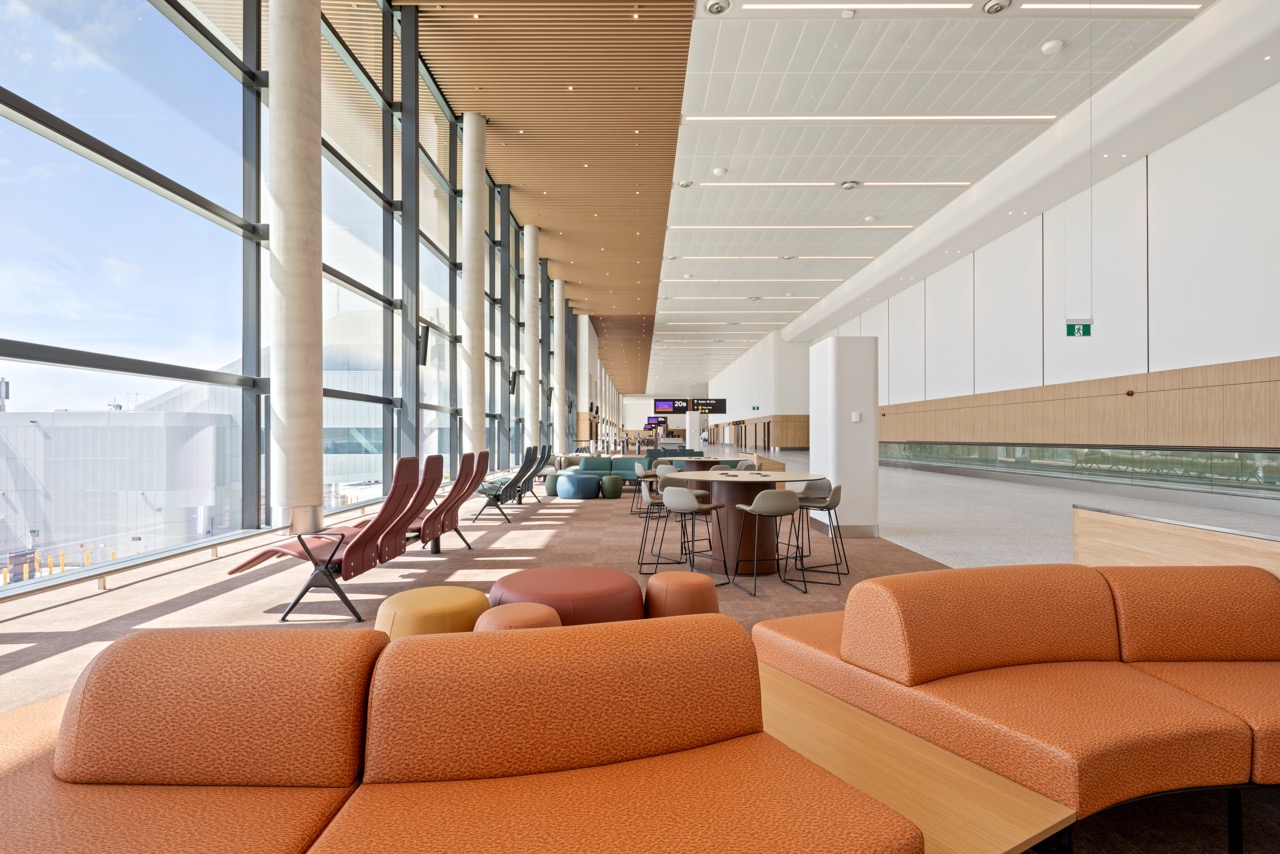
Western Sydney International (Nancy-Bird Walton) Airport (WSI) is Australia’s first major greenfield airport in more than 50 years, and when it opens in the second half of 2026 will become Sydney’s only 24/7 gateway. For Burgtec, it represents not only a prestigious commission but also a step into a new arena: public furniture. We spoke with Director Joel Kennard about the journey, the challenges and why this project matters so much for Burgtec’s future.
WSI is a major milestone for Burgtec. How does it mark a shift from your traditional focus on office furniture?
We’ve been concentrating on workplace and office furniture pretty much forever. In recent years, we started working in healthcare, mainly the kinds of furniture you’d also find in an office but that are used throughout hospitals. That opened the door to more public spaces, public area seating and so on. Our hospital projects gave us a lot of confidence. Over the last five years we have delivered more than 20 major hospitals in NSW and the ACT. The head contractors and builders on those projects are the same ones who deliver large-scale infrastructure. So it felt like a natural progression into something like this.
Public space projects add a whole extra layer. The phrase that gets used everywhere is “fit for purpose.” The real question is: fit for what purpose? In an airport, anybody could be using that furniture. The contract set very strict criteria: durability, longevity, load-bearing, cleanability, maintainability. The baseline wasn’t eight hours a day in an office, it was round-the-clock use — 24/7, 365 days a year for ten years. And even then, they knew things would break. So we had to design not just for use but for replacement and repair. Offices are controlled environments. Airports are unpredictable. That was the big challenge.
Public space projects add a whole extra layer. The phrase that gets used everywhere is “fit for purpose.” The real question is: fit for what purpose? In an airport, anybody could be using that furniture. The contract set very strict criteria: durability, longevity, load-bearing, cleanability, maintainability. The baseline wasn’t eight hours a day in an office, it was round-the-clock use — 24/7, 365 days a year. And even then, they knew things could need repair or replacement. So we had to design not just for use but for refurbishment and refit. Offices are controlled environments. Airports are unpredictable. That was the big challenge.
Add to that the fact that it’s not every day a completely new airport is built.
Exactly. Airports are usually extensions or refurbishments. WSI is the first Australian airport in more than 50 years. That made it cutting edge but also a little unknown. The client had their vision, the architect their design intent, the builder their delivery targets, and then there was us, responsible for making products that satisfied everyone on time and within budget. It was the most intensive design process I’ve ever been through. To come out of it with a happy client, happy architect and happy builder was a huge achievement.
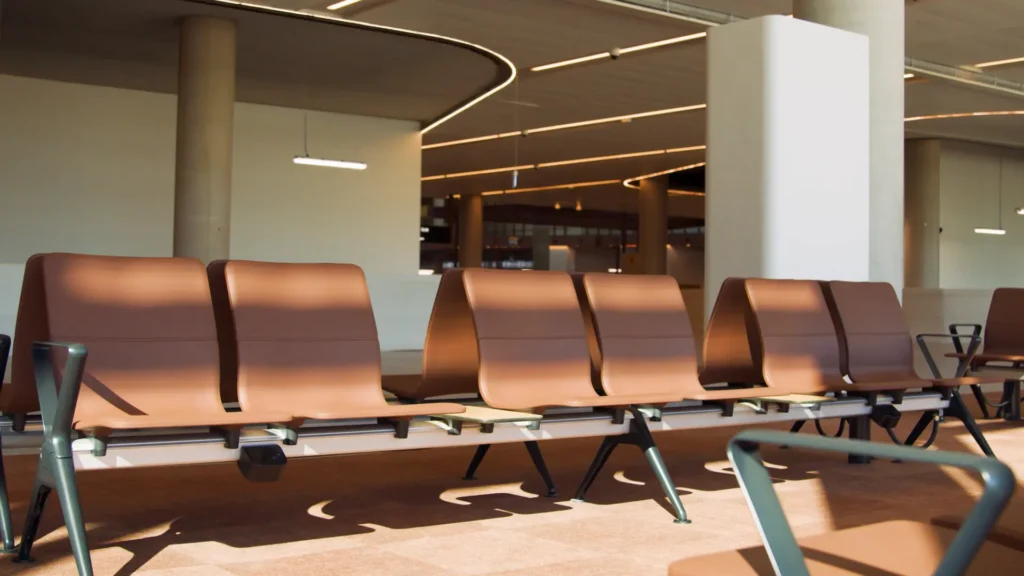
It’s massive. Normally our furniture is tucked away in offices where only employees use it. This time it’s right out there in public. And the seats are the one element of an airport everyone experiences. You might not notice the runway lights or the engineering behind the HVAC, but you’ll definitely sit in the chairs. That makes them a tactile, visible part of the project. For us, that means a huge shift in our profile.
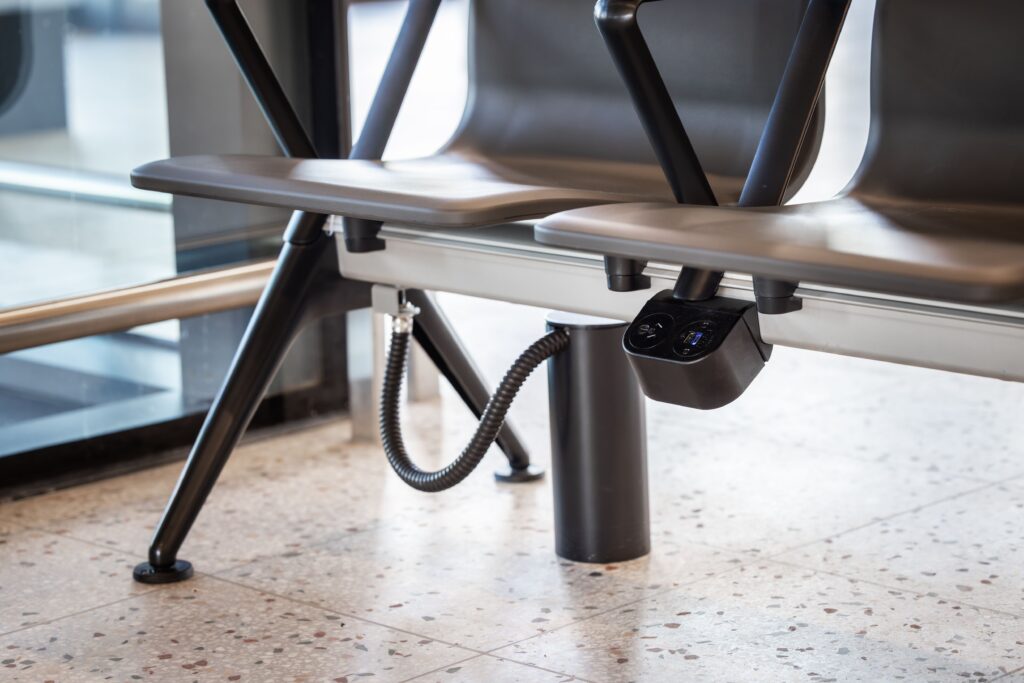
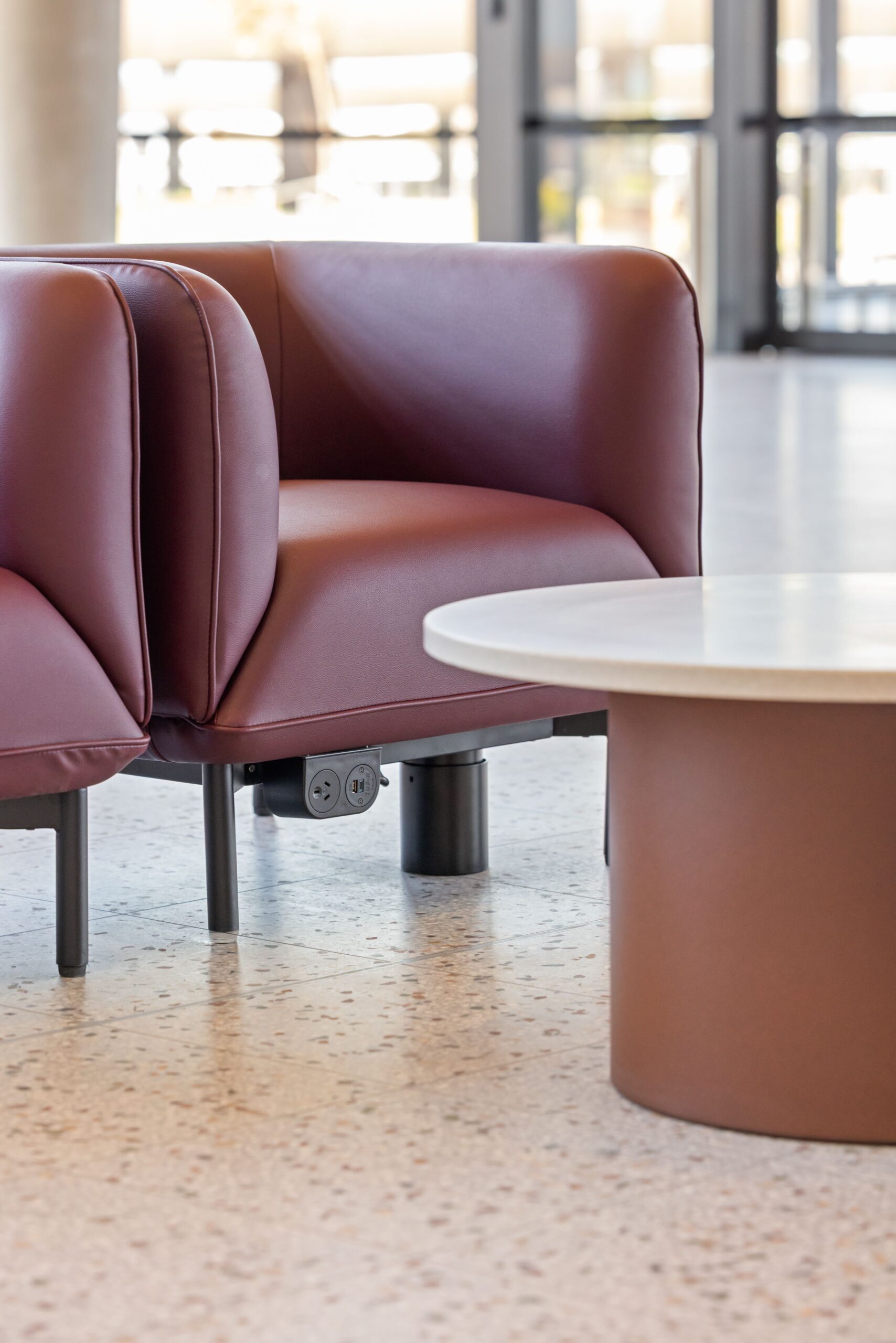
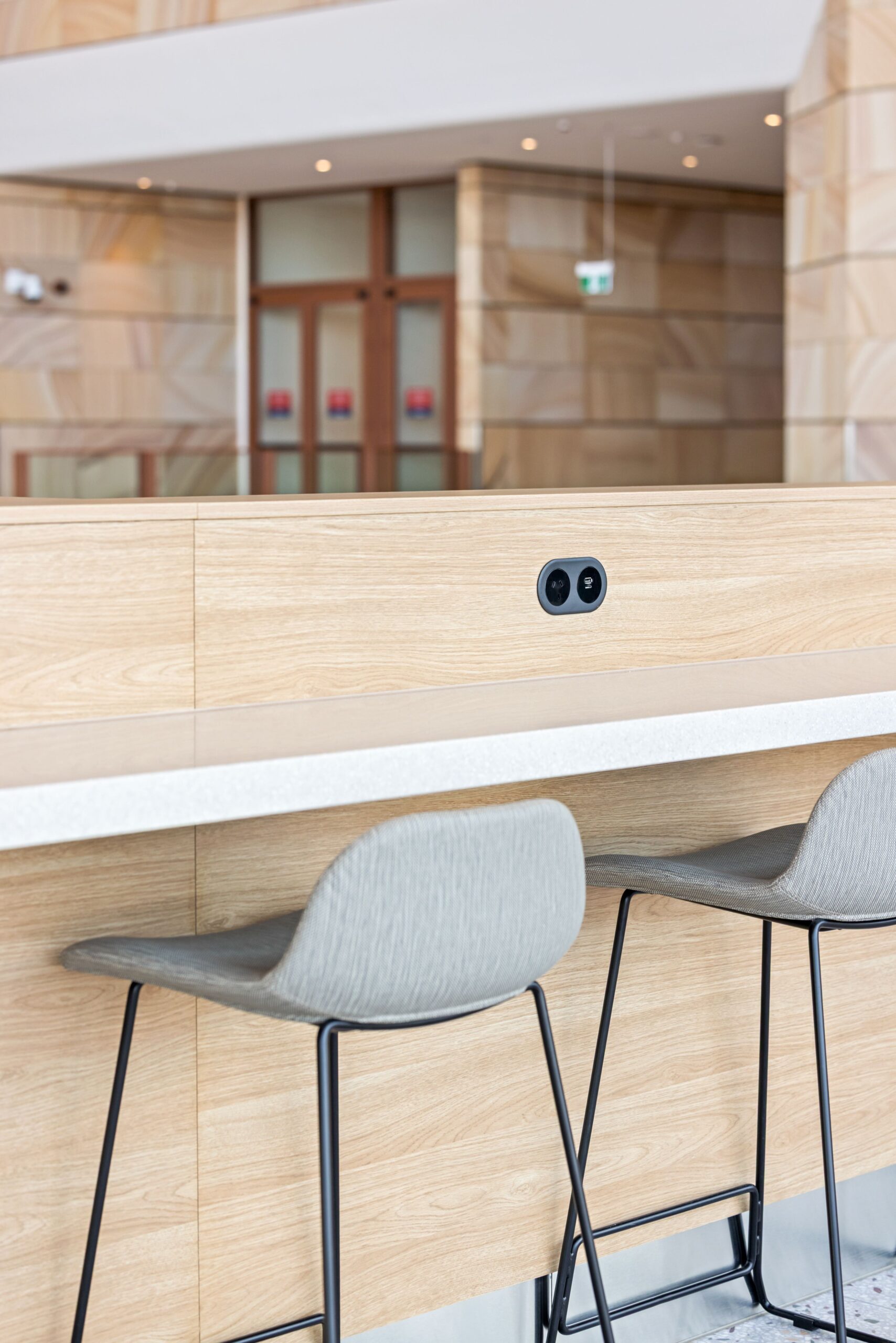
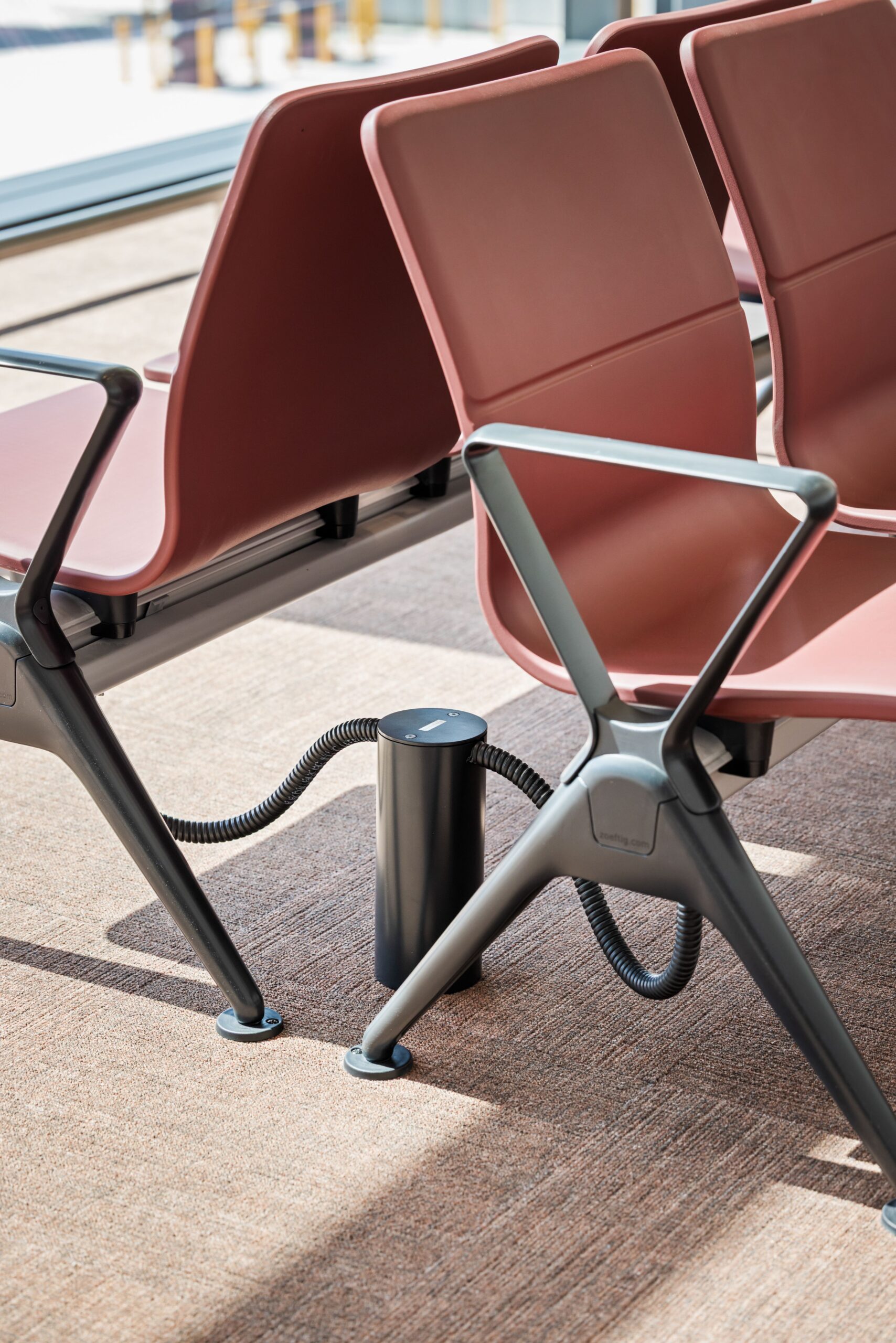
The performance standards hardcoded things like charging access. At least half of all seats needed charging ports, and they could not be clustered in one spot. They had to be spread evenly throughout the airport. Accessibility was also built in from the start. It
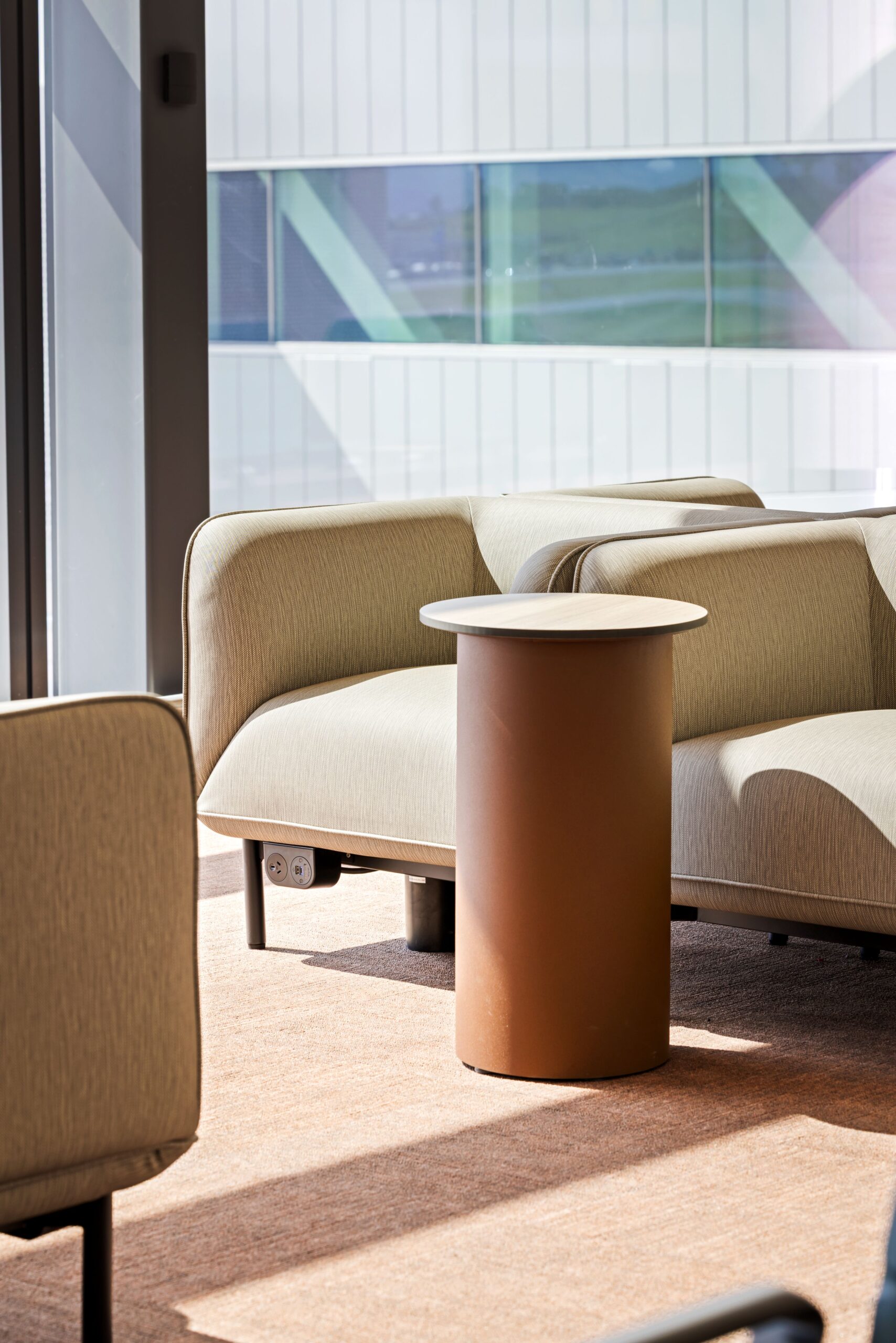
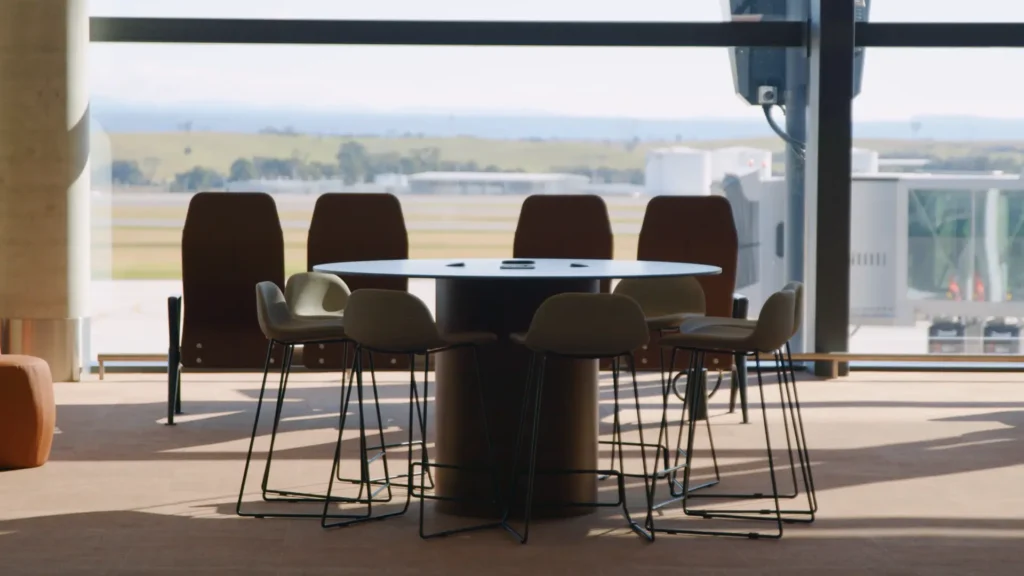
wasn’t something you retrofit; it had to be integral. Then there was the colour palette. The airport looks out to the Blue Mountains, so the interiors take inspiration from the landscape: rusts, blues and greens. Woods Bagot led the design, and our furniture needed to reflect those shifts across the terminals. Unlike an office where you roll out 50 chairs in the same colour, here we had multiple palettes across different zones. On top of that, we used soft furnishings, which is unusual for airports. The challenge was finding upholstery that could stand up to the rigours while still delivering the aesthetic.
That it all looks like it belongs. The furniture feels like it was designed with the building, not added at the last minute. Knowing how much work went in at the start, it’s satisfying to see it come together seamlessly. The architect had been on the project for years before us, but we were able to meet their brief and keep the integrity of their vision. For me, that’s the real success.
Definitely. Every major project helps hone our process, but this one took it to another level. The level of documentation was enormous; 100 to 150 items of furniture across acres of floor space, with multiple palettes and types. Managing it all was a baptism of fire for our team, but it stretched us in the best way. We’ve now got systems and processes that will serve us on future projects, whether public or commercial. You can’t fake it on something like this. You have to deliver. And that helps you grow as a company.
That’s right. It’s a milestone for us on our journey. It’s our most public and visible work to date, and it shows that Burgtec isn’t just about offices. It proves we can deliver complex, high-profile public projects with industry-leading collaborators. For our business and our people, it’s been transformative.
Every project, regardless of scale or location, is assured by our full capability.